
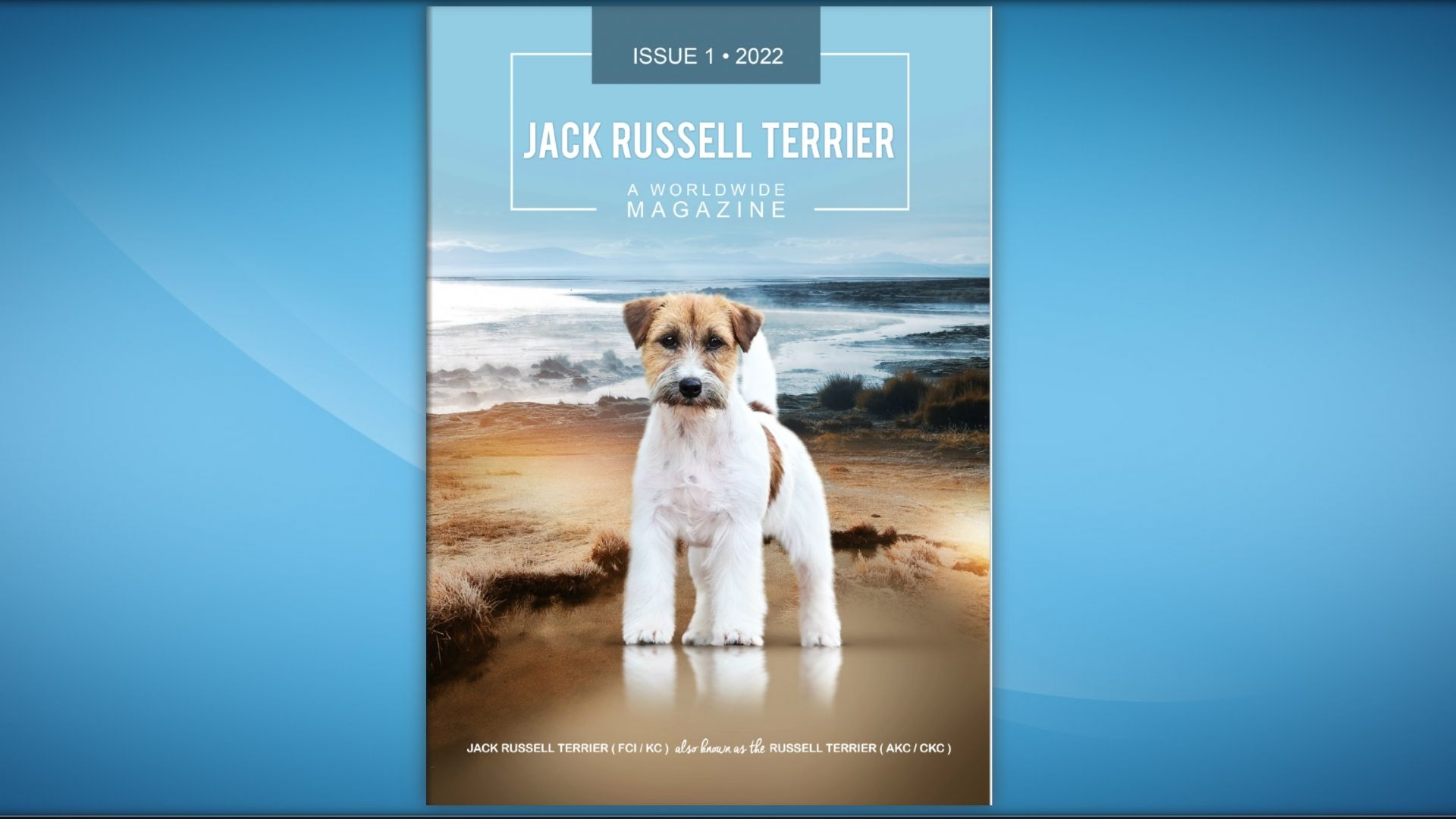
By Liz McKinney
Falling Branch Terriers
Often when breeders are discussing dogs of any breed there seems to be some confusion between the words “type” and “style” and what they actually mean. I know that I am guilty of using the two words interchangeably even though they are not interchangeable.
“Type” has a distinct meaning in the world of purebred dogs. In the book An Eye for A Dog – Illustrated Guide to Judging Purebred Dogs, the author, Robert Cole, says:
\In judging dogs The question then is, \What is type?\ Ask 10 judges to define type and you are likely to receive 10 different answers–and they could all be correct. The answers differ because type, as applied to dogs, has a very broad and special meaning. It infers that set of features listed in the Standard are present and in the right proportion. I have two favorites. One is from the late Tom Horner, who wrote, \Type is the sum of those points that make a dog look like its own breed and no other.\ The other is Edd Bivin’s answer. Bivin says in part, \Type is the essence of a breed and may be defined as the picture or image of a breed derived from those characteristics that make the breed different and distinctive from all others. Type characteristics are often overlooked in evaluating dogs, but one must remember that without type, the identity of the breed is lost.
If you look at a silhouette of a dog and you cannot tell or aren’t sure what breed that dog is then he has no breed “type”. If you look at the silhouette of a specific breed, in this case the FCI Jack Russell Terrier, and you think you are looking at a small Parson Russell or a Puddin’ then the dog is lacking in breed type. If he has no breed type, no matter what his good points, no matter how structurally sound he is, and no matter how beautifully he can move, he is not a good example of the breed. If you see a silhouette of a JRT and you KNOW that you are looking at an FCI Jack Russell Terrier/ Russell Terrier then the dog has breed type. Now, whether he has outstanding or poor structure or balanced, efficient movement or not, is entirely another matter. Within every breed are several \styles\ that fit within the breed “type.” Most people really mean \style\ when they say \type\. \Style\ is a term that refers to acceptable differences that one sees within a generally accepted breed standard. It is generally \style\ differences that you see in different strains within that breed. There are several different styles of Jack Russell Terriers/ Russell Terriers being shown throughout the world. Perhaps, some are a slight bit shorter in leg than the 50-50 ratio, some are somewhat thicker in body, but they still meet the breed standard. Some are SLIGHTLY longer than tall and are flatter of muscle and are stretchier i.e., more refined as opposed to cobbier. Some have broader muzzles and wider back skulls while others may have a bit longer, thinner muzzle. But both are easily recognizable as Jack Russell Terriers/ Russell Terriers. They just represent different “styles” within the breed.
A strain is usually defined as a bloodline originating from one breeder or one kennel. For example, within the world of the working Jack Russell Terrier, meaning the world of the professional terrierman employed by the various organized hunts in the UK, you will see different strains of terriers in different kennels in various areas of the UK. The strains represent their pedigrees and bloodlines. Those terriers used to hunt the Exmoor are going to be of similar style sharing common ancestors in a pedigree and smaller than those terriers, for example, used in Wales where a larger and longer-legged terrier is required to navigate the rocks and rock dens. The differences in strains were driven by the requirements of the terrain and size of the dens and the bloodlines in each area as well as the personal preferences of the individual terrierman.
If you look at the terriers of employed working terriermen such as David Jones, Greg Mousely (Meynell), Eddie Chapman (Foxwarren), and Roger Bigland (Heythrop) you will see a consistent style or “look” that is reflected in the pedigrees of the terriers they used and bred. One can look at a terrier bred by any of those terriermen and see that those terriers are different in style from each other but all easily recognizable as the same breed. When you are familiar with the different bloodlines and the style or phenotype that comes from those bloodlines, or when you see a certain style of dog in the show ring you will say to yourself, “That looks like So-and-So’s breeding.\
Those who have been around for quite a while can generally check the catalogue and the dog’s pedigree with few surprises. The same is true of the FCI Jack Russell Terrier/ Russell Terrier. If you study different breeders’ kennels that have been breeding for a couple of decades and have developed their own individual strain over the many years you will see a distinct and recognizable style of dog. Although every breeder begins with other breeders’ bloodlines, a breeder may begin to combine or blend those bloodlines into a distinct style all his/her own. It doesn’t mean that all of a breeder’s terriers will look exactly alike, but you will see basic similarities and patterns in the amount of bone, the head shape, type of ears, length of neck, forechest, amount of muscling and so forth that represents a terrier as being from so-and-so’s kennel. Study those terriers from the kennels that you like, and you will find that you begin to recognize the distinct style for which that breeder is known. This holds true for every breed of dog in the world. From among the gene pool there are going to be several premier breeders who have made a mark on the world with their own style of dog and that style of dog carries the same or similar bloodlines or their own “strain” of dog. So different bloodlines, or strains, generally produce different styles within the same breed standard.
But within a breed all the individuals in that breed should be of the same type, or recognizable as that breed in silhouette. When you look at the silhouette of a dog without color and markings to complicate the picture, if you cannot easily and correctly recognize the breed then you are looking at a silhouette of a dog that lacks breed type for its breed. If you look at a silhouette and you say to yourself, “Now that is a Jack Russell Terrier,” then the individual you are looking at has breed type. Without breed type you have nothing. Breed type is a place to begin. When you have breed type in your kennel then you decide what style of dog you want to breed and show. After many years and through the careful blending of different bloodlines you will develop your own strain of terriers. This is the place to start but not the place to stop. Once a breeder understands the difference between breed type and style, the breeder must move beyond “type” to breed a terrier with proper structure and proper movement within his or her own strain or style. And j udges should follow the well-respected, late Anne Rogers Clark’s advice: “First choose the individuals in your ring with the best breed type, and then reward the soundest of those typey individuals.”
Fonte designbyewa


 IT
IT  EN
EN